


Clean-Label Milk Alternatives: Why Ingredients Matter More Than Ever

Clean-Label Milk Alternatives: Why Ingredients Matter More Than Ever
Jan 14, 2026 | By JOI team
Plant-based milk officially took over the beverage aisle. We now live in a world where choosing milk feels like choosing a college major: overwhelming, oddly emotional, and full of options that look identical until suddenly they are not.
But here is the catch: not all plant-based milks are the same. Some cartons are genuinely clean, wholesome, ingredient-minimal joys, and some are basically water mixed with a science experiment and a dream. Enter clean-label milk, short ingredient list, no mysterious gums, no oils pretending they belong in your latte, and no additives that sound like the name of a villain in a sci-fi movie.
Today, we are breaking down ingredients like it is a Spotify Wrapped, and we are perusing how to finally pick healthy plant-based milk without needing a Chemistry degree.
What does “Clean Label Milk” Actually Mean?
Clean-label milk is beautifully simple. Think:
- Nuts, grains, or seeds
- Water
- Maybe salt
- Maybe add a vitamin, if needed
And absolutely not: a list of ingredients so long you need a deep breath before reading it aloud. Somewhere along the way, “healthy products” started getting loaded with gums, flavour syrups, sweeteners, seed oils and stabilisers trying to cosplay as real food. Many plant-based milks are basically “milk-flavoured” beverages wearing wellness athleisure.
That is why clean-label options matter; they strip things back to the way milk should be.
Why Ingredients Matter More Than Ever
See, the world is an unequal space; some can sip gums and emulsify without a problem. Others? One latte and suddenly their stomach is the set of the latest Jumanji movie.
Cleaner formulas tend to be gentler, more predictable and will not leave you wondering what exactly went wrong.
Just because someone says you love them, it does not mean they do in the same way. If a carton says plant-based, it does not mean it is healthy. Some oat milks add seed oil, while other almond milks sneak in sugar. Some cashew milk obviously adds ingredients that were not invited. Ingredients influence everything, calories, fats, texture and how your body reacts.
A short ingredients list means fewer surprises. And honestly? Reading a label should not feel like scanning the script of a courtroom drama. Consumers want clarity, and clean labels provide it.
Common Ingredients in Plant-Based Milk: The Good, The Meh and The Red Flags

The Good Ones
These are the dependable favourites:
- Whole food bases like almond, cashew, oats, soy and coconut hemp
- Water
- Salt
- Vitamins and Minerals, when they are actually nice
Minimalist. Sensible and not trying to be mysterious.
The “It Depends” Category
These ingredients are not “inherently evil”; think of them as the side characters who are waiting for their growth arc:
- Gellan gum
- Guar gum
- Xanthum gum
- Lecithins
- Emulsifiers
Sometimes they add texture, and sometimes they just add a sense of whimsy and a personality boost.
The Red Flags
AKA the “read twice and squint” section:
- Lots of added sugars
- Random oils
- Artificial flavours
- Stabilizer cocktails
- The ingredients list is longer than an episode of “Grey’s Anatomy”
If the carton is promising health but the ingredient list screams “plot twist”, just skip it.
Healthy Milk Alternatives: What to Look For On The Carton
A quick cheat sheet:
- 3-5 ingredients
- Sugar should not be high on the list
- Oil should not be sneaking in as a surprise guest
If it passes those three checks, it is winning.
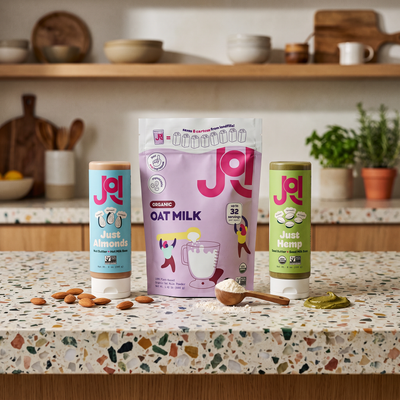
Powdered Plant-Based Milk as a Clean-Label Hack
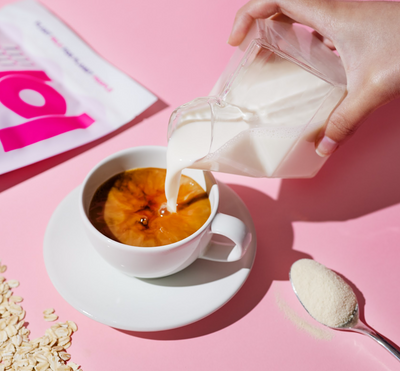
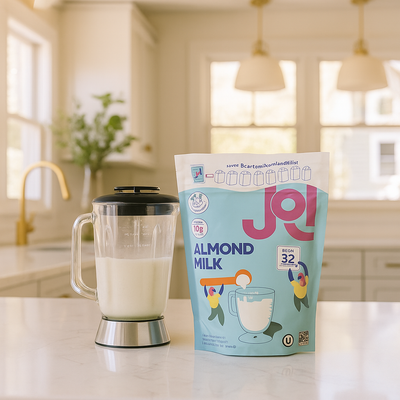
Powdered plant-based milk is the unsung hero of the pantry; quiet, unproblematic, then suddenly saves your entire kitchen routine.
It’s usually just nuts/grains + salt, which is refreshingly drama-free.
Features include:
- Shelf-stable (more reliable than your Wi-Fi during a storm)
- Customizable (strong, light, “I’m having a day”, choose your intensity)
- Zero waste (your compost bin says thank you)
- No “milk expired yesterday, sorry” chaos
It’s basically the friend who always has tissues, gum, snacks, and emotional stability in their bag. Bless them.
How to Transition to Cleaner Vegan Milk Options
Start With One Swap
You do not need to Marie Kondo your fridge into a minimalist shrine overnight.
Just switch your usual milk to a cleaner version of the same type. Baby steps. No need for a montage.
Learn Your Taste & Texture Preferences
- Oat = creamy & sweet (the people-pleaser of milks)
- Cashew = silky & rich (your luxury-budget option)
- Almond = light & neutral (an everyday reliable sidekick)
- Coconut = dessert-level indulgence (the dramatic friend who shows up wearing sequins for no reason)
Essentially, find your milk zodiac sign.
FAQs About Plant-Based Milk & Clean Labels
Are all vegan milks healthy?
Absolutely not. Some are sugar in a trench coat.
Is homemade milk always better?
Not always, depends on ingredients, time, and your blender’s emotional stability.
Choosing Plant-Based Milk That Actually Matches Your Values

Clean-label options give you transparency, control, and the peace of knowing your “healthy choice” is actually healthy.
Check one label this week. Upgrade one carton. Find a milk that matches your taste, lifestyle, and values without the hidden additive drama.
Your fridge deserves honesty. Your coffee deserves clarity. And you deserve a clean-label milk that isn’t lying to you.
 CHECKOUT


