



Is Oat Milk Gluten-Free? What to Check on the Label

Is Oat Milk Gluten-Free? What to Check on the Label
Oct 15, 2026 | By JOI team
Is your oat milk gluten-free? It seems like an odd question because oats don't naturally contain gluten. But seeing “oat milk” on a carton doesn't automatically confirm the milk is gluten-free. Oats are innocent; logistics are complicated. While oats do not naturally contain the gluten found in wheat, rye, or barley, they can come into contact with gluten-containing grains during farming, transport, milling, or manufacturing.
So, when the package says oat milk, the ingredient list tells part of the story. If you are watching your gluten intake, gluten-free deserves more than a glance. Let’s look at what else you need to check, especially if celiac disease is part of the picture, and explore how JOI keeps gluten out of your oat milk, even through logistics.
Why “Is Oat Milk Gluten Free?” Is Really a Processing Question
If oats naturally contain no gluten, where does the problem start? It can happen at several points along the way, from fields and harvesting equipment to transport, grain storage, milling, and manufacturing facilities.
Oats are often grown or processed alongside wheat, barley, and rye, making cross-contact possible before the oats ever become milk. In other words, cross-contact happens before breakfast.
The oat is only as uncomplicated as the supply chain. Some producers use purity protocols or mechanical and optical sorting to reduce this risk. But processing matters as much as the ingredient name.
What “Gluten-Free” Actually Means on a U.S. Label
So, what does “gluten-free” actually mean when you see it on an oat milk carton? In the U.S., the FDA has a rule. If a food says “gluten-free,” “free of gluten,” “no gluten,” or “without gluten,” it must contain less than 20 parts per million of gluten. 20 ppm is the number worth knowing.
You may also see products with a third-party gluten-free certification. Certification is useful, but it is not the legal definition. A product does not have to be certified to meet the FDA’s gluten-free labeling rule. Different certification programs may have their own testing requirements, too.
So, front-of-package language follows specific rules. An “uncertified” label does not automatically mean the product contains gluten.
The Five Things to Check Before Buying Oat Milk
If you are particular about keeping your oat milk gluten-free, check these five things before you put that carton in your cart. Five checks beat one assumption.
-
Look for a Gluten-free Statement: JOI uses gluten-free oats and states that its oats contain less than 20 ppm gluten. The product is not third-party certified gluten-free, so that distinction is worth knowing.
-
Read the Complete Ingredient List: JOI keeps this one pretty simple. Its Organic Oat Milk Powder uses 100% organic oats, so it has no barley malt, wheat-derived ingredients, or long list of extras to decode.
-
Check Allergen and Facility Disclosures: JOI clearly states that it makes its powder in a facility that also processes wheat, dairy, eggs, and tree nuts. That gives you useful information about the manufacturing environment.
-
See What the Brand Says About its Oats: JOI provides information about its gluten threshold and sourcing, rather than leaving you to guess what “oat milk” means.
-
Consider Your Own Oat Tolerance: A product label alone can't answer this. The Celiac Disease Foundation recommends choosing oats that are specifically labeled gluten-free. If you have celiac disease, it is also a good idea to talk to your gastroenterologist or dietitian about whether oats are right for you.
Read beyond the oat illustration. Good labels answer boring but important questions. And when a brand gives you those answers upfront, choosing what works for you becomes a little easier.
Is Gluten-Free Oat Milk Powder Different From Carton Oat Milk?
Powder or carton? Honestly, the format doesn't determine gluten status. A gluten-free oat milk powder isn’t automatically safer than oat milk from a carton. Nor is the carton automatically the problem.
What matters is which oats were used, whether the finished product meets gluten-free requirements, what else has been added, and how it was handled along the way.
Powder changes convenience, not oat biology. You can keep it in the pantry, mix only what you need, and adjust how creamy you want your milk. Powder changes convenience, not oats' biology. So check the oats first, then choose the format that works for you.
Where JOI Organic Oat Milk Powder Stands

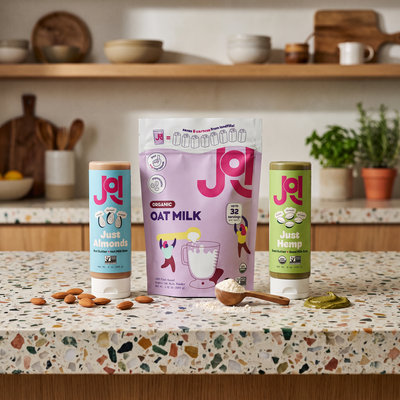
Oats may be naturally gluten-free, but getting them from the field to your pantry can get complicated. JOI keeps that part pretty straightforward. Its Organic Oat Milk Powder starts with 100% organic oats that JOI describes as gluten-free and says contain less than 20 ppm gluten. It also keeps the formula to one ingredient, with no added gums, oils, stabilizers, or preservatives.
And JOI doesn’t stop at the easy part. It is transparent about what happens beyond the pouch too. The oats are not third-party certified gluten-free, and the powder is made in a facility that processes wheat, dairy, eggs, and tree nuts.
So, is oat milk gluten-free? One ingredient leaves less label detective work. Transparent beats vague. Simple formula, important disclosure.
What About Oat Creamers, Smoothies, and Other Oat Products?
Oat milk isn’t the only oat product that deserves a little label attention. If you are gluten-conscious, you need to be careful even with oat creamers, ready-made smoothies, flavored beverages, protein shakes, and baking mixes. These can all have extra ingredients that change the gluten equation. Once those enter the formula, every added ingredient gets its own background check.
Malt is one to watch because traditional barley malt contains gluten. And remember: wheat-free and gluten-free aren't synonyms. Barley and rye contain gluten too. The finished drink is what matters, so read the whole label before you pour.
Why JOI Works Well Beyond a Glass of Oat Milk

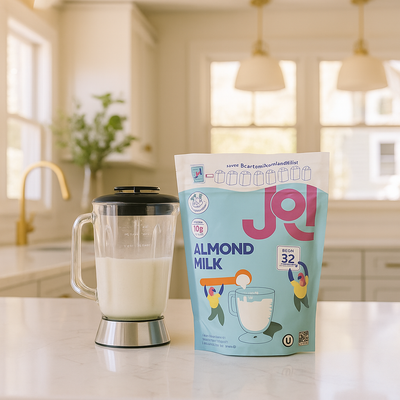
The best part about having JOI organic oat milk powder in your pantry is that you don’t have to use it just one way. Mix the oat milk powder with water for a glass of fresh oat milk without opening another carton.
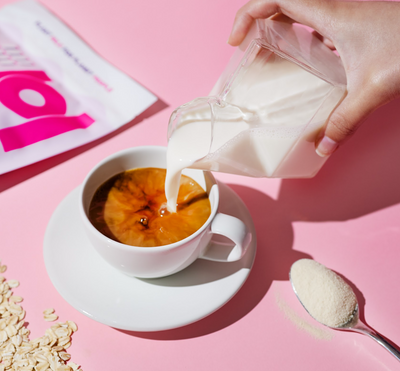
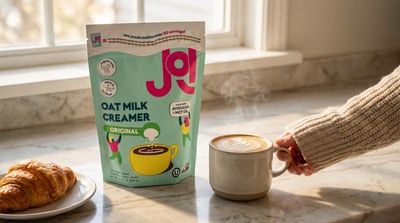
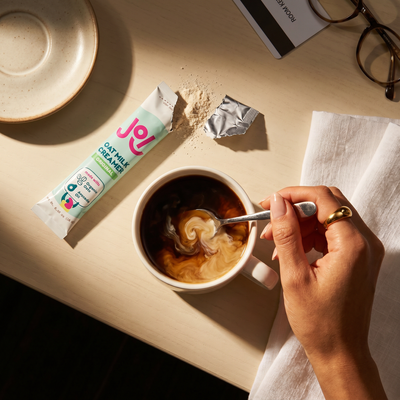
But that’s not it. It is useful beyond a glass. You can add it directly into your coffee. Blend it with the fruits and veggies you choose, and you've got your favorite gluten-free smoothie. Use it in a bowl of overnight oats in place of milk. You can even add it to your baking. One pouch, several breakfast jobs done.
So, Is Oat Milk Gluten-Free? Read the Label Before You Pour
So, does oat milk have gluten? Yes, it can be. Oats themselves aren’t the troublemakers here. It’s what can happen to them along the way. JOI tackles that uncertainty by starting with gluten-free oats, keeping its Organic Oat Milk Powder to one ingredient, and stating that its oats contain less than 20 ppm gluten. It also clearly discloses that the facility processes wheat, so you know what you’re buying instead of having to guess.
For celiac disease, personal oat tolerance matters and is worth taking seriously. Check first, pour second. The answer lives on the label. Simple oats, informed choice.
If finding gluten-free oat milk feels like a task, explore JOI Organic Oat Milk Powder and know exactly what goes into your milk.
 CHECKOUT


