




The Water Footprint of Plant Milk: What is the Real Story?

The Water Footprint of Plant Milk: What is the Real Story?
Mar 12, 2026 | By JOI team
Even five to ten minutes of your internet time in the recent past must have exposed you to plant milk being dragged into a sustainability fight it never wanted to be a part of. Almond milk is "bad." Oat milk is "good." Cashew milk is barely mentioned, but it is quietly making money. And somehow, in every discussion, someone mentions that they are changing their milk once again.
Plant milk has been widely regarded as the healthier option, whether in terms of its animal origins, its environmental impact, or its impact on the planet, but the water debate has made things trickier. Villains are more romanticized in headlines, as is sustainability, which cannot be announced in a single slide on Instagram.
The issue is that the majority of debates about the water footprint of plant milk oversimplify a highly complex system. Water utilization is not universal, and crops, climates, formats, and habits are all important. Slow it down, then unload the meaning of the numbers, without panic or guilt, and compare plant milks like they are reality TV contestants.
What Does "Water Footprint" Actually Mean?
When we refer to water footprint, we are not simply referring to water consumed by a crop. Water footprint has three categories, and they are not developed equally.
Blue water is irrigation water, or water drawn from rivers, lakes, or underground sources.
Green water is rainfall that is absorbed by plants and soil.
Greywater refers to water used to dilute agricultural pollution.
Why does this matter? This is because rain-fed and irrigated crops appear very different in water statistics. Even a crop that is grown on rainfall alone in one area would appear much more water-efficient than a crop that is cultivated on heavy irrigation in another area.
When we speak of sustainability, the place or the way something grows is as important as what it grows.
Why Comparing Plant Milks Is More Complicated Than It Looks

Raw crops are the most widely compared: almonds, oats, and cashews. But we do not drink crops; we drink finished products.
Plant milk is mostly water. That is to say that concentration is important. Processing, packaging, and transport matters.
When a statistic concerning the amount of water used to produce an almond in a pound is described, it does not necessarily correspond to that of an almond milk glass.
And then there is the problem of size. The frequency of use, the rate of waste, and the time it takes to go out of shape before we go through it can significantly alter the actual environmental impact of something.
That is, per-crop statistics do not tell the entire picture. Not even close.
The Water Footprint of Almond Milk, Separating Fact from Headlines
The water-intensive label is tightly attached to almonds, particularly when a significant proportion of almond production occurs in California, a state closely linked to drought. Almonds need a lot of water per pound, which makes it a striking headline.
But headlines usually end at that point.
What Often Gets Missed
When the water footprint of almond milk is calculated per glass, it is significantly lower than that of dairy milk. As a matter of fact, there is still less water used in almond milk as a whole in comparison with cow milk.
This does not imply that almond milk is flawless, but that the context is important.
When Almond Milk Can Be a Responsible Choice

Almond milk may be a more sustainable choice when it is:
- Developed using effective formulations.
- Utilized to the full.
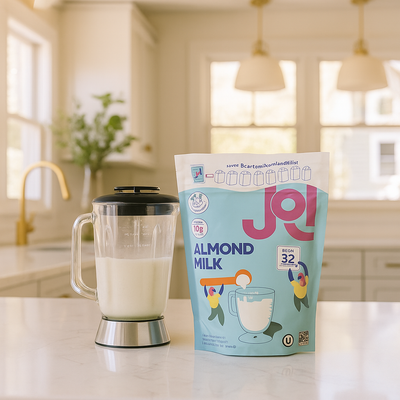
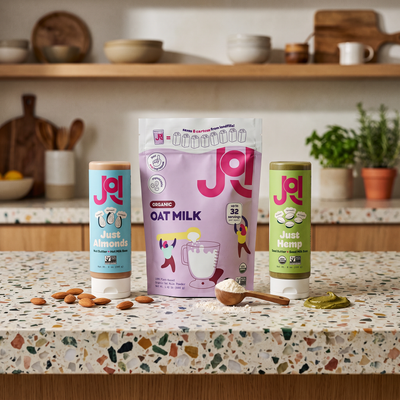
- Available in powdered or concentrated forms, which minimise water and transportation effects.
Sustainability does not involve perfection; it is about systems that reduce waste.
Cashew Milk and Water Use: A Different Kind of Trade-Off
Cashews tend to grow in tropical areas where rainfall contributes more to irrigation. Most cashew farms depend more on the green water than the blue water, which can reduce irrigation requirements as opposed to the utilization of crops in drier climates.
Regardless, the amount of water consumed remains highly divergent by location and agricultural activity. It has no common cashew story-just trends.
Cashew Milk in Context
This is the single positive aspect of cashew milk: it is naturally creamy. It implies that a reduced quantity of raw material may be required to give the same texture and richness, and a reduced amount of stabilizers may be used in most formulations.
It is not glitzy, but it works.
Oat Milk Sustainability: Why are Oats Seen As Low Impact Crop?
Oats are grown in high-rainfall areas where the climate is colder, and irrigation is less needed than for other nut crops. The factors have made oat milk a sustainability favorite. Oats satisfy many boxes crop-wise.
Having said that, oat milk is not flawless per se. Oils or gums are usually added during processing to make it creamy, and sourcing remains an issue.
Oat milk sustainability is also robust, particularly relative to dairy. In the broader context, like any plant milk, oat milk depends on how it is formulated, transported, and consumed.
The Overlooked Factor: Format Matters
Format is one of the least considered and least valued issues of sustainability.
Mostly, water is carried in liquid plant milk cartons. That affects shipping emissions, packaging volume, and energy use for storage. Concentrated and powdered forms, on the other hand, greatly diminish:
- Water waste
- Shipping weight
- Packaging impact
The process of planting milk and its final delivery can be just as significant as the crop itself. Sometimes more.
Is There a “Best” Plant Milk for Water Use?
Short answer: no.
Trade-offs are involved in almond, cashew, and oat milks. The perfect choice does not exist; all choices are a little more informed.
Water footprint depends on:
- Portion size
- Frequency of use
- Food waste
- Product format
Sustainability does not mean choosing correctly in the first instance. It is all about the thoughtful and continuous use of what you choose.
What Actually Makes Plant Milk More Sustainable
When we analyse closely, the largest sustainability victories are usually habits, not headlines.
- Using only what we need.
- Avoiding spoilage and waste.
- Selecting fewer complicated lists of ingredients.
- Encouraging open sourcing.
Impact lies in thinking in systems and not in individual stats.


FAQs
Is almond milk bad for the environment?
No, although it does use more water than other alternatives, that is compensated for by lower dairy use.
Is oat milk always the most sustainable?
Often, but sourcing and producing always matter.
How does cashew milk compare?
Cashew milk can be very competitive due to the added creaminess.
Does powdered plant milk use less water?
Yes, more so when comparing transport reduction and waste minimization.
How does plant milk compare to dairy overall?
Plant milk uses significantly less water than dairy overall.
The Real Story Isn’t About One “Good” or “Bad” Plant Milk
The water footprint conversation truly needs fewer villain arcs and more depth in the timeline.
The bottom line is that yes, plant milk uses far less water than dairy alternatives. Almonds, cashews, and oats can all be part of the system when thoroughly processed and added cleanly.
The most sustainable plant milk isn’t the one with the best headline; it’s the one that’s used intentionally, wasted less, and made with care.
Check out JOI’s collections and choose better, sustainable options for your dairy needs.
 CHECKOUT


