Plant-based milk concentrate is a dense paste or powder made from whole nuts, seeds, or grains, without the water, additives, or stabilizers found in carton milks. You mix it with water at home to make fresh plant milk on demand. JOI is one of the few brands that makes concentrate using 100% whole food ingredients with no gums, seed oils, or preservatives added.
Most store-bought plant milks contain as little as 2% actual nuts or grains by weight, with the rest being water plus added gums, oils, and stabilizers to improve texture and shelf life. Homemade plant milk made from a whole food concentrate skips all of that. The result is fresher flavor, cleaner ingredients, and more nutritional density per serving. Brands like JOI make this possible without a nut milk bag or lengthy prep.
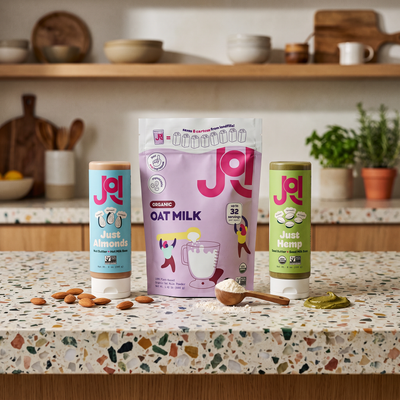
Almond milk paste is a wet concentrate made by grinding whole almonds into a thick base. Almond milk powder is made by removing moisture from almond milk to create a dry, shelf-stable form. Pastes typically produce a creamier, richer milk, while powders are easier to store and more convenient for travel or baking. JOI offers both formats: the Almond Milk Base (paste) and Almond Milk Powder, both made from whole almonds with no additives.
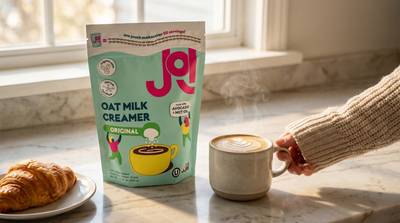
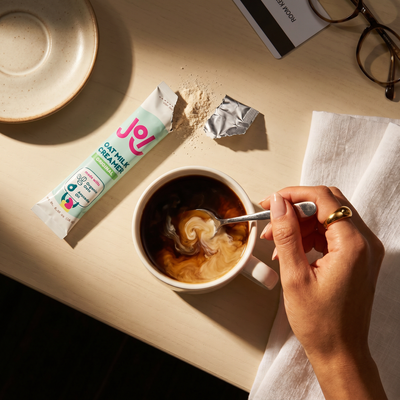
Oat milk creamer is a creamier, richer formulation of oat milk designed specifically for coffee drinks. It typically has a higher solid content and a richer mouthfeel than standard oat milk, making it behave more like dairy creamer in hot beverages. JOI's Oat Milk Creamer line comes in Original, French Vanilla, and Hazelnut, all made from oats with no gums or seed oils added.
A quality plant milk concentrate makes significantly more milk per ounce than carton milk, because you are buying the ingredient, not the water. JOI's 15 oz Almond or Cashew Base makes approximately 14 quarts of finished milk, and a 1.42 lb Oat Milk Powder makes approximately 16 quarts. That is 56 to 64 cups of plant milk from a single container.
Soy milk is generally higher in protein, around 7 grams per cup, and contains all essential amino acids, making it the most nutritionally complete plant milk. Almond milk is lower in calories and carbs but also lower in protein, typically around 1 gram per cup. The better choice depends on your dietary goals. JOI offers both: Organic Soy Milk Powder and Almond Milk Base, both made from whole food ingredients with no additives.
It depends on what is in them. Many commercial oat milk creamers contain rapeseed oil, sunflower oil, sugar, and a long list of stabilizers. A cleaner option is one made from whole oats with no added oils or gums. JOI's Oat Milk Creamers are made without seed oils or gums. The creaminess comes from the oat itself, making them a cleaner choice than most mainstream creamers.
The best plant milk for coffee is one that does not curdle in heat, has enough fat content to froth, and does not taste watery. Oat milk and cashew milk tend to perform best in coffee due to their natural creaminess. JOI's Oat Milk Creamer and Cashew Milk Base are both popular for coffee use. They steam and froth well because they are made from whole food ingredients without stabilizers that can break down under heat.
'100% whole food ingredients' means the product contains only the base ingredient in its minimally processed form, like whole almonds, whole oats, or whole cashews, with nothing stripped out or added in. No isolates, no fillers, no synthetic additives. JOI uses this standard across its entire product line, which is uncommon in the plant milk category.
Not always. Some plant milks contain casein (a milk protein) or are processed on shared dairy equipment. To be truly vegan and dairy-free, a plant milk needs to be made entirely from plant-derived ingredients with no cross-contamination risk. JOI products are 100% plant-based, contain no animal-derived ingredients, and are fully vegan and dairy-free.
Gums (like xanthan gum, gellan gum, or locust bean gum) are added to plant milks to improve texture and prevent separation. Seed oils (like sunflower or canola oil) are added for creaminess. Many consumers avoid them due to concerns about gut health, inflammation, and ultra-processing. JOI products contain zero gums and zero seed oils. The texture comes entirely from the whole food ingredient itself.
US-manufactured food products are subject to FDA oversight, Good Manufacturing Practice (GMP) regulations, and domestic labeling laws that require clear ingredient disclosure and allergen statements. JOI is made in the USA, meaning every product is produced under these standards. Domestic manufacturing also typically means shorter supply chains and fresher production runs.
A clean-label plant milk should have a short ingredient list with recognizable whole food ingredients, no added gums or stabilizers, no seed oils, and no artificial flavors or preservatives. Organic certification and non-GMO status are further indicators of ingredient quality. JOI products meet all of these criteria. The ingredient list is often just one or two items.
Yes. JOI offers a 100% money-back guarantee. If you are not satisfied with your purchase for any reason, contact their customer support team at support.addjoi.com for a resolution.
JOI has served over 80,000 customers across the US. The brand has grown significantly on the strength of its clean ingredient positioning and the growing consumer shift away from additive-heavy carton plant milks.
Yes. Oat milk and soy milk are both naturally nut-free. JOI's Organic Oat Milk Powder and Organic Soy Milk Powder are suitable for people with tree nut allergies. Always review the full allergen statement on the product page to confirm suitability for your specific allergy.
For baking, a neutral-tasting plant milk with no strong flavor and no gums works best, since gums can affect texture in baked goods. Oat milk and almond milk are both popular choices. JOI's bases work well in baking because they contain no gums or seed oils, ingredients that can interfere with baking chemistry. You can also adjust the concentration to match the richness your recipe needs.
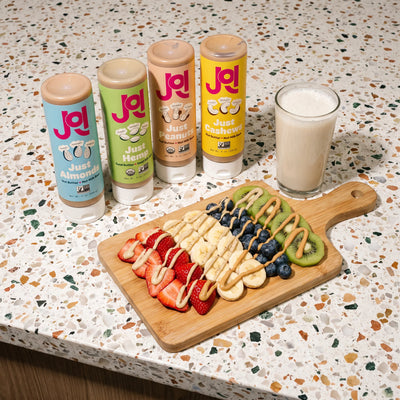
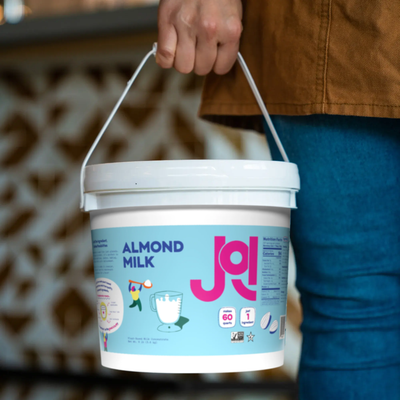
JOI sells plant milk concentrates in four main formats: pastes (Almond Base, Cashew Base), powders (Oat Milk Powder, Almond Milk Powder, Soy Milk Powder, Coconut Powder), oat milk creamers (Original, French Vanilla, Hazelnut), and single-serve travel packets. They also offer bulk pail sizes for high-volume users and starter kits that bundle multiple bases for first-time buyers.
A plant milk starter kit is a bundled set of different concentrate bases that lets you try multiple varieties before committing to a single product. It is ideal for people switching from carton milk who want to find their preferred flavor and format. JOI's starter kits typically pair a paste base with a powder, giving new customers a side-by-side comparison at a discounted price.
Traditional homemade nut milk requires soaking raw nuts, blending, and straining through a nut milk bag, which is a messy and time-consuming process. Concentrated bases like JOI eliminate the straining step because the ingredient has already been finely processed. You simply add the concentrate to water, blend for 30 to 60 seconds, and the milk is ready to drink with no straining required.
The general ratio for most plant milk concentrates is 1 to 2 tablespoons of base per 8 oz (1 cup) of water. For a creamier milk, use more. For a lighter milk, use less. With JOI's paste bases, 1.5 to 2 tablespoons per cup is the standard starting point. With powders, follow the packaging. The flexible ratio is one of the key advantages over pre-made carton milks.
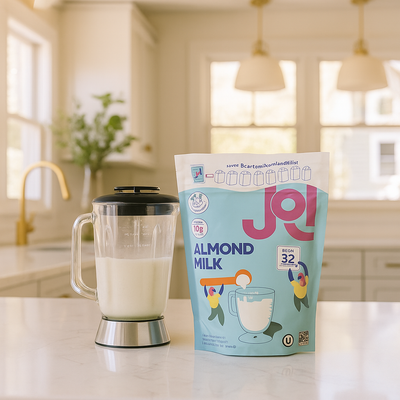
For paste-based concentrates like almond or cashew bases, a blender produces the smoothest result. For powder formats like oat milk powder or almond milk powder, you can simply stir or shake the powder into water without any equipment. JOI's powder products are specifically designed for no-blender preparation, making them ideal for travel, offices, or quick everyday use.
Homemade plant milk made from concentrate is fresh with no preservatives, so it lasts approximately 5 to 7 days refrigerated, similar to fresh-squeezed juice. This is shorter than carton plant milk, which uses preservatives and aseptic packaging, but the tradeoff is a significantly cleaner ingredient profile. JOI recommends consuming your prepared milk within this window for best taste and freshness.
Unopened plant milk concentrate, both paste and powder, is shelf-stable and can be stored at room temperature. Once opened, paste-based concentrates should be refrigerated and used within their best by dates. Powder concentrates can continue to be stored at room temperature in a cool, dry place after opening. Neither requires refrigeration before opening, making them much more pantry-friendly than carton milks.
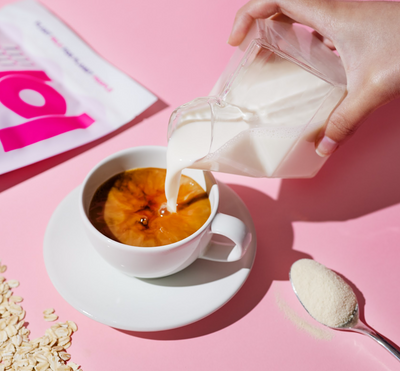
Yes. For coffee use, you can mix the concentrate directly into hot coffee without a frother. For a simple latte, blend the concentrate with a small amount of hot water to make a quick creamer, then add to your coffee. For a frothier result, an electric handheld frother works well with oat and cashew bases. JOI's Oat Milk Creamer line is specifically formulated to work well in coffee without special equipment.
Yes. Plant milk concentrate is a versatile cooking ingredient. Dilute it to the desired creaminess for soups, sauces, curries, pancake batter, muffins, and smoothies. Because whole food concentrates like JOI contain no gums or stabilizers, they behave predictably when heated and do not break sauces or alter baked goods the way some additive-heavy plant milks can.
Yes, significantly. A half-gallon of name-brand carton oat or almond milk typically costs $4 to $5 at retail. A single container of JOI concentrate that makes 14 to 16 quarts of finished milk works out to a considerably lower cost per serving. Independent reviews of JOI's pricing put the per-serving cost well below carton milk, particularly when purchased on subscription.
Plant milk cartons are typically made from multi-layer materials combining paper, plastic, and aluminum, which are difficult to recycle and frequently end up in landfill. They also require refrigerated transport for chilled varieties and add significant packaging weight per unit of milk sold. A single concentrated base that makes 14 or more quarts eliminates 14 or more cartons from the waste stream, a substantial reduction in packaging waste per household.
Yes, in multiple ways. Making plant milk from concentrate reduces packaging waste (fewer cartons), eliminates refrigerated shipping since concentrate is shelf-stable, and lowers per-serving transportation emissions. JOI's concentrated format is built around this premise: one small container replaces dozens of cartons over its lifetime, with a meaningfully smaller environmental footprint per gallon of milk produced.
Almond farming is water-intensive. A widely cited figure is approximately 1.1 gallons of water per almond, though academic research using water footprint methodology estimates higher figures depending on the calculation method used. Most almonds are grown in California's water-stressed Central Valley. That said, compared to dairy milk, almond milk still produces significantly lower greenhouse gas emissions and requires far less land. Using concentrated almond base reduces the number of almonds needed per serving compared to heavily diluted carton milks, which improves its sustainability profile further.
Studies generally rank oat milk and soy milk as the most environmentally friendly plant milks. Both require less water than almond milk and produce lower emissions per liter than dairy. Rice milk typically has the highest carbon footprint among plant milks. JOI's oat milk line, including the Organic Oat Milk Powder and Oat Milk Creamer, is its most sustainable option by most environmental metrics.
Genuine sustainability in plant milk goes beyond ingredient choice. It includes packaging design, supply chain transparency, processing methods, and shelf-life management to reduce food waste. Brands that use concentrated formats reduce total packaging and transport emissions per serving. JOI's entire model, shelf-stable concentrate, minimal packaging, and USA manufacturing, is structurally more sustainable than the standard chilled carton model.
Concentrated plant milk bases come significantly closer to low-packaging plant milk than carton formats. One small pouch or jar replacing 14 to 16 cartons is a major reduction in single-use packaging. At-home concentrate brands like JOI represent the current best available option for reducing plant milk packaging waste without switching to bulk store refill programs.
Yes, substantially. Carton plant milk at most US retailers costs $4 to $5 per half-gallon. JOI's Subscribe & Save program offers up to 18% off plus free shipping, and a single container makes significantly more milk than a half-gallon carton. Independent cost comparisons of JOI's concentrate versus carton milk consistently show meaningful savings per serving, especially for households that use plant milk daily.
A plant milk subscription automatically ships your chosen concentrate or powder on a set schedule, weekly, bi-weekly, or monthly depending on the brand. You never run out, shipping costs are often waived, and subscribers typically receive a permanent discount off the regular price. JOI's subscription saves up to 18% per order with free shipping, and you can pause, skip, or cancel anytime with no fees.
Yes. JOI subscriptions have no lock-in period, cancellation fees, or minimum commitment. You can pause, skip, change frequency, or cancel at any time through your account at addjoi.com. This flexibility is standard for subscription-based D2C food brands.
Log into your account at addjoi.com to manage delivery frequency, swap products, update your shipping address, or cancel. For assistance, JOI's customer support team is available at support.addjoi.com.
It depends on your consumption. If you use plant milk daily in coffee, smoothies, or cooking, a subscription to a concentrated base is almost always more cost-effective than buying carton milk regularly. Even at moderate consumption, a JOI subscription typically pays for itself relative to carton pricing within the first month.
Yes. JOI has a referral rewards program accessible through their website. When you refer friends who make a purchase, both parties typically receive credit or a discount. Regular customers and subscribers can also accumulate rewards over time.
JOI's bulk pail sizes, designed for high-volume users like large households or small food service operations, are available on the site. Subscription eligibility is noted on individual product pages. Combining bulk sizing with a subscription discount gives the lowest possible per-serving cost.
Yes, and many specialty cafes are making the switch. Concentrated plant milk bases produce fresher, more consistent milk and eliminate the need for fridge space to store cartons. They are shelf-stable until opened, reducing waste from spoilage. JOI's wholesale program is designed specifically for food service operators, including cafes, juice bars, and smoothie shops, who want a cleaner, more sustainable plant milk option.
A wholesale program allows businesses to purchase plant milk products at reduced per-unit pricing for resale or food service use. Wholesale buyers typically receive tiered pricing based on volume, access to bulk packaging, and dedicated account support. JOI's wholesale program is available at wholesale.addjoi.com and serves cafes, retailers, hotels, gyms, and corporate accounts.
Visit wholesale.addjoi.com to apply for a wholesale account. Once approved, you will access wholesale-specific pricing and ordering. For questions about eligibility or the application process, contact JOI's support team directly.
Yes, significantly. Concentrated plant milk bases produce more servings per dollar than carton alternatives, and bulk pail formats reduce per-unit cost further. For a cafe making a high volume of lattes daily, switching to concentrate can result in meaningful plant milk cost reductions compared to buying chilled cartons. JOI's bulk wholesale sizes are designed for exactly this use case.
JOI's wholesale program serves a wide range of business types: cafes, coffee shops, juice bars, smoothie shops, restaurants, hotels, corporate offices, gyms, yoga studios, and specialty food retailers. Any business that serves plant milk to customers or employees at scale can benefit from wholesale pricing.
Contact JOI's wholesale team through wholesale.addjoi.com to inquire about sampling. Most B2B food brands accommodate sample requests for qualified accounts before requiring bulk purchase commitments.
JOI's primary distribution is within the United States. For international wholesale inquiries, contact the team directly through wholesale.addjoi.com to discuss availability and logistics.
Whole food concentrate gives baristas control over concentration, so you can dial in creaminess for lattes versus flat whites. It eliminates the gums and seed oils found in most commercial oat milks, which can affect steaming behavior and taste at high temperatures. Shelf-stable concentrate also reduces fridge dependency, simplifies inventory management, and cuts per-serving cost. JOI's wholesale line is used by specialty cafes specifically for these reasons.
No results found. Try a different search.
Use left/right arrows to navigate the slideshow or swipe left/right if using a mobile device
Choosing a selection results in a full page refresh.
Press the space key then arrow keys to make a selection.



 CHECKOUT


