



Mixing Protein Powder With Plant Milk: What Blends Smoothly and What Clumps

Mixing Protein Powder With Plant Milk: What Blends Smoothly and What Clumps
Oct 22, 2026 | By JOI team
With protein being such a big part of nutrition, we want to add it to everything. Even our plant-based milk. But when we add protein powder, the shake can look completely normal at first. Then you take a sip, and suddenly little powder pockets float around in your mouth. Not exactly the creamy smoothie experience we had in mind.
Honestly, protein belongs in the shake, not in tiny dry islands. Almond milk and protein powder can absolutely make a smooth, creamy shake, but the milk is only part of the equation. Smoothness is a method, not good luck. The protein powder, liquid-to-powder ratio, ingredient order, and mixing method all matter.
In this JOI guide, we'll look at what makes protein mix smoothly into plant-based milk, why clumps happen, and how to avoid them. Because your blender deserves better material to work with.
Why Protein Powder Clumps in the First Place
So why does protein powder that mixes easily with water or dairy milk suddenly clump in plant milk? Is it the protein or the plant milk? The lump usually has an explanation.
Dry powder needs to become evenly wetted and dispersed through the liquid. If the outside hydrates quickly while dry powder stays trapped inside, lumps can form. Not every scoop behaves the same way.
Protein source, processing, drying methods, pH, temperature, minerals, and protein concentration can all affect solubility. Powder chemistry meets breakfast reality.
Why Almond Milk and Protein Powder Work Well Together
Then why do almond milk and protein powder work so well together? Almond milk provides the liquid needed to disperse the powder while adding creaminess, a mild nutty flavor, and more body than plain water. The milk sets the stage; the mixing finishes the job. How creamy or thick that feels, though, depends on the milk’s formulation and concentration.
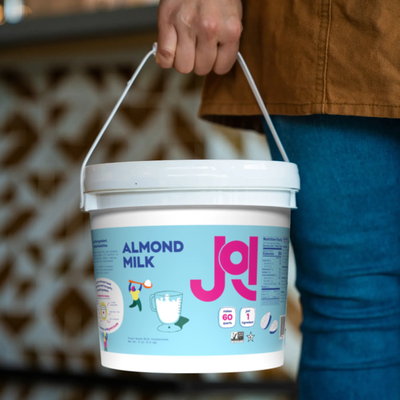
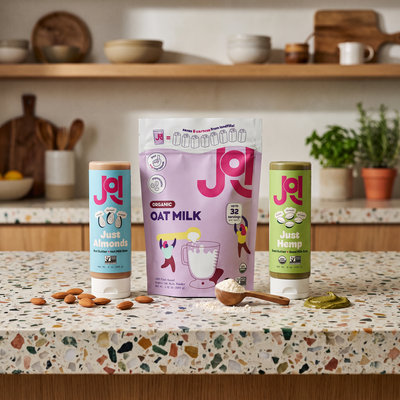
Texture should be adjustable. JOI’s product comes in different formats, from powder to paste, which gives more flexibility. We can make the milk lighter for a drinkable shake or richer for a thicker smoothie.
That matters because different protein powders and serving sizes may need different amounts of liquid. Creaminess is helpful; technique is essential.
Which Protein Powders Usually Need More Mixing?
The protein scoop matters as much as the milk. But when choosing a protein powder, we cannot just simplify it to “whey is good, plant protein is bad” and move on. Different powders behave differently in liquid, so it helps to know what you are working with.
Whey powders often mix relatively easily. But factors like temperature, acidity, and the powder’s formulation can still affect how smoothly they disperse.
Pea protein can be a little more stubborn depending on how it was processed. So, it may need some extra shaking or a turn in the blender.
Soy and other plant proteins can behave differently too. Plant protein is a category, not one texture.
Then there are blended powders, which may contain gums, fibers, and other ingredients that change how thick or smooth the shake feels. The scoop matters as much as the milk. Formulation beats stereotypes, so check the mixing instructions on your specific powder too.
The Mixing Order That Gives Protein Powder a Fighting Chance
We take mixing order pretty lightly, but it can make a real difference in how well protein powder and plant milk come together. So, if you have been dealing with the same mixing trouble for a while, let’s fix that. Here’s the order to follow next time.
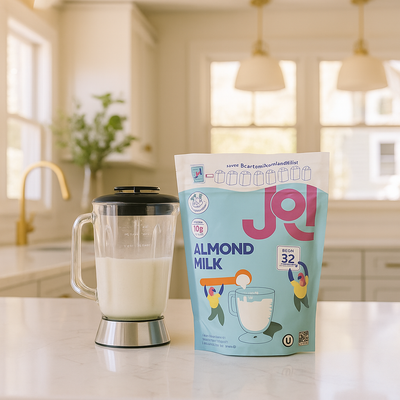
Liquid gets first dibs on the blender, so start from there. If you are adding almond milk with protein powder, add your water and JOI Almond Base first. Then mix in the protein powder. Next, add your fruit, nut butter, oats, ice, or any other thicker ingredients you prefer. This gives the powder somewhere to go instead of letting it stick to the bottom or corners.
If you are using a shaker, leave some room for the mixture to move. And if it gets too thick, add more liquid gradually. Because thickness is adjustable; concrete is not the goal.
Blender, Shaker Bottle, or Spoon: Which One Wins?

The mixing tool you use can make a small difference, too. Choose the tool that matches the texture you want.
A blender is your best bet for smoothies with fruit, ice, oats, seeds, nut bases, or a protein powder that refuses to cooperate. A shaker bottle is convenient for mixing plant milk and protein powder. A whisk or handheld frother can work for smaller servings and powders that mix easily.
The spoon is trying its best. But stubborn powder deserves actual agitation. You can whisk JOI Almond Base, but blending gives the smoothest, silkiest texture.
Which JOI Makes Protein Shakes Easier to Customize

So, what’s the best milk for protein shakes? Honestly, the best depends on the job. Almond gives you a lighter, nutty flavor. Cashew makes things richer and creamier. Oat brings that soft, fuller feel, while soy can add more protein from the milk itself. Texture, flavor, and nutrition are separate decisions, so choose the base your shake actually needs.
With JOI Almond Base, we get a little more control. By adjusting the base-to-water ratio, you can mix the smoothie by adding water, JOI, protein powder, and everything else straight into the blender. More JOI makes it richer; less keeps it lighter. One less carton, one less step. The shake chooses how creamy the milk needs to be.
Five Fixes for a Protein Shake That Keeps Clumping
If you have followed every step properly and still find a few lumps in your shake, don’t panic. There are a few things you can try. Let’s troubleshoot before blaming the almonds.
-
Add more liquid. More powder is not always more smoothie.
-
Put the liquid in first so the powder has room to mix.
-
Blend instead of stirring.
-
Add the protein gradually if it is especially stubborn.
-
Check the powder itself. Different formulations have different dispersibility.
Switching milk may help with texture, but it cannot fix every formulation problem. If lumps persist across different liquids and methods, the powder may simply have poor dispersibility. Clumps are a texture problem, not a personality trait.


FAQs
Can I put protein powder directly into almond milk?
Yes. Just use enough liquid and shake or blend thoroughly for a smoother result.
Why does my plant protein stay gritty?
Some plant protein isolates can be less soluble or have larger particles, depending on how they are processed. This can make them harder to mix smoothly.
Can I blend JOI directly with protein powder?
Yes. JOI recommends its Almond Base for protein smoothies, and you can add it directly to your smoothie along with the other ingredients.
Does thicker almond milk stop clumping?
Not necessarily. More body can improve the mouthfeel, but you still need enough liquid and proper mixing.
Better Almond Milk and Protein Powder Starts With Better Mixing
So, if your protein shake is still giving you tiny powder surprises, look at the whole picture. The protein formulation, liquid ratio, and mixing technique all matter. Almond milk can bring the creaminess, but good mixing brings the drink together.
With JOI, you get to choose how rich you want your base, make only what your smoothie needs, and blend it right in with your protein powder. Control the ratio, then let the blender work. Here’s to a smoother shake, fewer powder surprises, and a protein shake without the spoon excavation.
Try JOI Almond Base and enjoy your plant milk and protein together, clump-free.
 CHECKOUT


