




Choosing a Plant Milk for Kids: What Parents Should Look For on the Label

Choosing a Plant Milk for Kids: What Parents Should Look For on the Label
Oct 21, 2026 | By JOI team
As parents, we keep a close eye on what our kids eat and drink. So switching from dairy to plant-based milk can feel tricky. The milk aisle has options, but your child has actual nutritional needs.
Almond, oat, soy, pea, coconut, cashew, unsweetened, fortified, barista. At this point, choosing milk can feel like a group project you did not sign up for.
When choosing plant-based milk for kids, start with the basics. How old is your child? Is the milk replacing dairy, or is it just going into pancakes and smoothies? What does the Nutrition Facts panel actually say? And do allergies or school rules change the equation?
In other words, look at the label first, then the lifestyle. Simple ingredients are useful, but nutrition still matters. That’s why we created this guide to help you make the switch for your kid. We’ll also show how JOI fits into family recipes and daily routines when you want more control over ingredients.
Age Comes Before Brand
Before comparing brands, check if your kid’s age is appropriate for the plant milk. A toddler and a ten-year-old are not shopping for the same job.
For children under 12 months, plant-based beverages should not replace breast milk or infant formula. From 12 to 23 months, nutrition needs change because kids need enough protein, fat, calcium, vitamin D, potassium, and calories during rapid growth.
Current U.S. guidance recognizes fortified, unsweetened soy beverage as a plant-based option nutritionally comparable enough to count in the dairy group.
Older kids have more flexibility. Still, check the label and look at the child’s whole diet. Remember, milk replacement and recipe ingredients are different roles.
How to Compare Plant-Based Milk for Kids on the Nutrition Facts Label
The front of the carton tells you what the milk wants to be. The Nutrition Facts panel tells you what your child is actually getting.
“Plant-based” is not a nutrition profile, so compare nutrients, not carton personalities.
Here’s what we’d check:
-
Protein: Levels vary widely. Many almond and oat beverages contain much less protein than cow’s milk or fortified soy.
-
Calcium: Worth checking for growing bones and teeth.
-
Vitamin D: Helps with calcium absorption and supports bone development.
-
Potassium: Another nutrient the FDA recommends comparing.
-
Added Sugars: Unsweetened options can be a practical choice for regular use.
-
Serving Size: Serving size quietly drives the whole conversation. Compare products cup-for-cup so you are actually comparing like with like.
The FDA recommends plant beverages that are generally higher in protein, calcium, vitamin D, and potassium, and lower in added sugars and saturated fat.
Fortified Versus Unfortified: Why That One Word Matters
Fortification means adding nutrients such as calcium or vitamin D to a food or beverage. If a plant-based beverage is regularly replacing dairy, those added nutrients can matter.
This is where minimalist products need a little context. Homemade plant milks and some products with very short ingredient lists may not contain the same added vitamins and minerals as fortified beverages.
We get why a short ingredient list looks appealing. But shorter doesn't automatically mean nutritionally complete.
And fortification is not a dirty word. It can help a beverage contribute nutrients your child needs. Think of ingredient simplicity and nutrient adequacy as two separate wins. Which matters more depends on what the milk does in your child’s overall diet.
Are Dairy-Free Smoothies Healthy for Kids?

So, are dairy-free smoothies healthy for kids? They can be, depending on what goes into the glass and what role the smoothie plays in your child’s diet.
Start with whole fruit. Add vegetables if your child enjoys them. Oats or seeds can fit where they suit your child’s age and diet. A protein or fat source can make the smoothie more filling.
Then, choose your liquid base.
JOI works naturally here because you can choose a plant milk that suits the recipe. Oats add a naturally sweet flavor, almond adds a mild nuttiness, coconut supports digestion, and other bases can change the flavor and texture depending on what you are making.
Just remember: a smoothie is a format, not a health guarantee. Whole ingredients do the heavy lifting. The blender does not need twelve ingredients to prove anything.
Where JOI Fits Best in a Family Routine

Once you know what your child needs, it's easier to see where JOI fits.
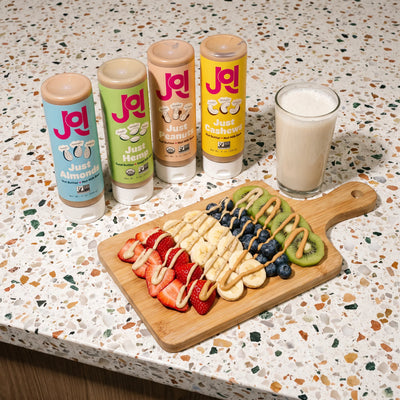
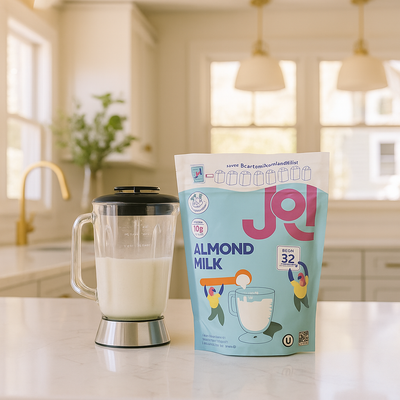
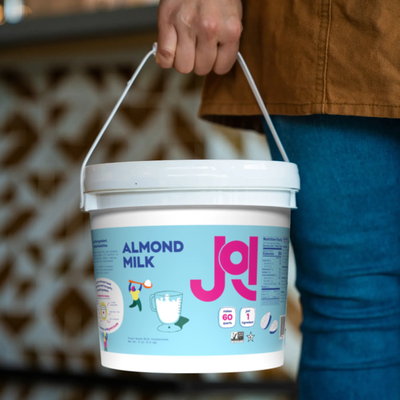
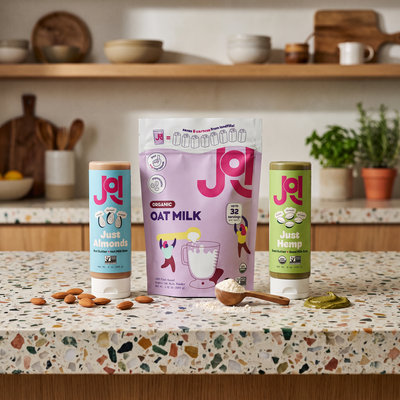
JOI Almond Base is made from blanched almonds. JOI Cashew Base contains cashews, while JOI Organic Oat Milk Powder contains organic oats. The appeal is straightforward: a simple ingredient list, pantry-friendly storage, adjustable richness, and the ability to make only what you need.
For families using plant-based milk for kids, JOI can be especially useful when the milk has a clear job in the meal. Think oatmeal, smoothies, pancakes, baking, sauces, or an older child’s everyday breakfast.
There is an important distinction, though. JOI’s one-ingredient almond, cashew, and oat products are not fortified pediatric milk replacements. We wouldn't position them as an automatic substitute for cow’s milk or fortified soy beverage for toddlers.
Instead, JOI is an excellent pantry helper, not a pediatric nutrition shortcut. Use the product for what it does best: giving you a simple, flexible plant base for the foods your family already likes to make.
Allergies and School Rules Need Their Own Check
This is where the ingredient list deserves another look.
JOI Almond Base contains almonds, while JOI Cashew Base contains cashews. Both official product information pages also include facility details that parents should check when allergies are a concern.
And school rules can be stricter than your own kitchen. Some schools or classrooms restrict common allergens, such as tree nuts, to protect students with serious allergies.
Before packing plant-based milk for school, check three things: your child’s allergy plan, the product’s allergen statement, and the school or classroom policy.
School-safe depends on the school. Ingredient one is not the only label line worth reading. And when school rules and convenience clash, allergy rules beat convenience every time.
The Right Plant-Based Milk for Kids Starts With the Right Question
No single carton wins for every family.
The right choice depends on your child’s age, allergies, overall diet, how much milk they drink, and whether the product is the main beverage or simply an ingredient.
For families whose nutritional needs are already covered, JOI brings simple, flexible plant bases to smoothies, oatmeal, pancakes, baking, and everyday cooking.
Start with the label, then let the product do the job it actually does well. A better question opens the door to a better choice. Simple ingredients work best when the whole diet makes sense, and one milk doesn't need to do every job.
Make choosing plant-based milk for your kids a little easier with 100% organic plant bases from JOI.
 CHECKOUT


